A Clinical Instructor is a healthcare professional who trains and supervises students in clinical settings such as hospitals, nursing colleges, and medical institutes. This career is ideal for those who want to combine patient care experience with teaching.
This complete guide covers eligibility, qualifications, salary, career path, and step-by-step process to become a Clinical Instructor in India.
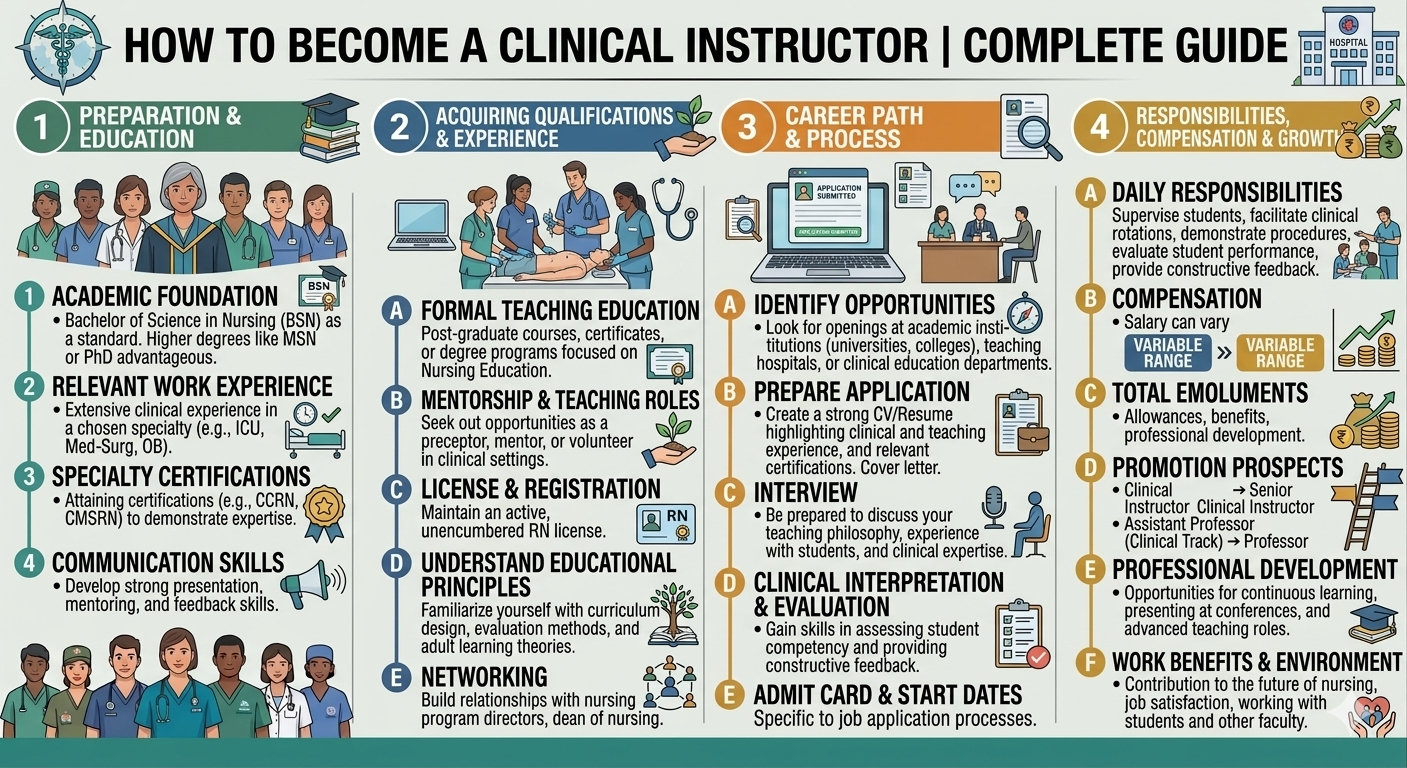
Who is a Clinical Instructor?
A Clinical Instructor teaches practical skills to students (nursing, medical, or paramedical) in real hospital environments. They guide students during patient care, procedures, and clinical decision-making.
Types of Clinical Instructors
- Nursing Clinical Instructor
- Medical Clinical Instructor
- Allied Health Instructor (Lab, Radiology, etc.)
Eligibility Criteria
Educational Qualification
For Nursing Clinical Instructor
- BSc Nursing (Minimum)
- MSc Nursing (Preferred/Required in many colleges)
For Medical Clinical Instructor
- MBBS with specialization (MD/MS preferred)
For Paramedical Instructor
- Relevant Bachelor’s/Master’s degree
Step-by-Step Process to Become a Clinical Instructor
Step 1: Complete 12th (Science Stream)
- Physics, Chemistry, Biology
Step 2: Choose Relevant Degree
Option A: Nursing Path
- BSc Nursing (4 years)
- MSc Nursing (2 years)
Option B: Medical Path
- MBBS (5.5 years)
- MD/MS (optional for higher roles)
Option C: Allied Health
- BPT, BMLT, Radiology, etc.
Step 3: Gain Clinical Experience
- Minimum 1–2 years hospital experience
- Hands-on patient care is essential
Step 4: Apply for Teaching Roles
- Nursing colleges
- Medical colleges
- Hospitals with training programs
Step 5: Clear Interviews & Certifications
- Teaching skills evaluation
- Communication assessment
Required Skills
- Clinical expertise
- Teaching ability
- Communication skills
- Patience & leadership
- Critical thinking
Salary of Clinical Instructor in India
| Experience | Salary |
|---|---|
| Fresher | ₹25,000 – ₹40,000/month |
| 2–5 Years | ₹40,000 – ₹70,000/month |
| Senior Level | ₹70,000 – ₹1,20,000/month |
Workplaces
- Nursing colleges
- Medical colleges
- Government hospitals
- Private hospitals
- Training institutes
Career Growth
| Role | Progression |
|---|---|
| Clinical Instructor | Entry Level |
| Lecturer | 2–5 Years |
| Assistant Professor | 5–10 Years |
| Professor | Senior Level |
Benefits of This Career
- Stable career in healthcare education
- Good work-life balance compared to hospital shifts
- Opportunity to teach and mentor students
- Career growth in academia
Challenges
- Requires strong subject knowledge
- Handling students in clinical settings
- Keeping up with medical advancements
Certifications (Optional but Helpful)
- Teaching methodology courses
- Clinical specialization certifications
- Research publications (for higher roles)
Clinical Instructor vs Staff Nurse
| Feature | Clinical Instructor | Staff Nurse |
|---|---|---|
| Work Type | Teaching + Supervision | Patient Care |
| Work Pressure | Moderate | High |
| Growth | Academic | Clinical |
FAQs
Q1. Can I become a clinical instructor after BSc Nursing?
Yes, but MSc Nursing is preferred for better opportunities.
Q2. Is experience required?
Yes, at least 1–2 years clinical experience.
Q3. Is NET required?
Usually not for nursing, but may be required for university roles.
Q4. Is it a good career?
Yes, especially for those interested in teaching and healthcare.
Q5. Can doctors become clinical instructors?
Yes, MBBS/MD doctors can work as instructors in medical colleges.
Conclusion
Becoming a Clinical Instructor is a rewarding career for healthcare professionals who enjoy teaching and mentoring. With the right qualifications, experience, and communication skills, you can build a stable and respected career in medical education.
Start with the right degree, gain clinical experience, and transition into teaching to achieve long-term success.
Table of Contents